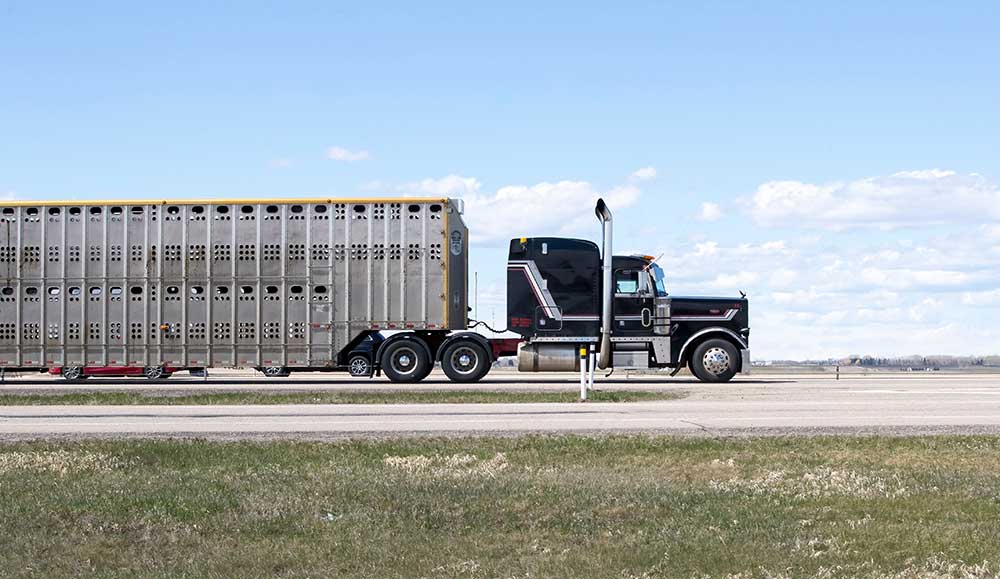
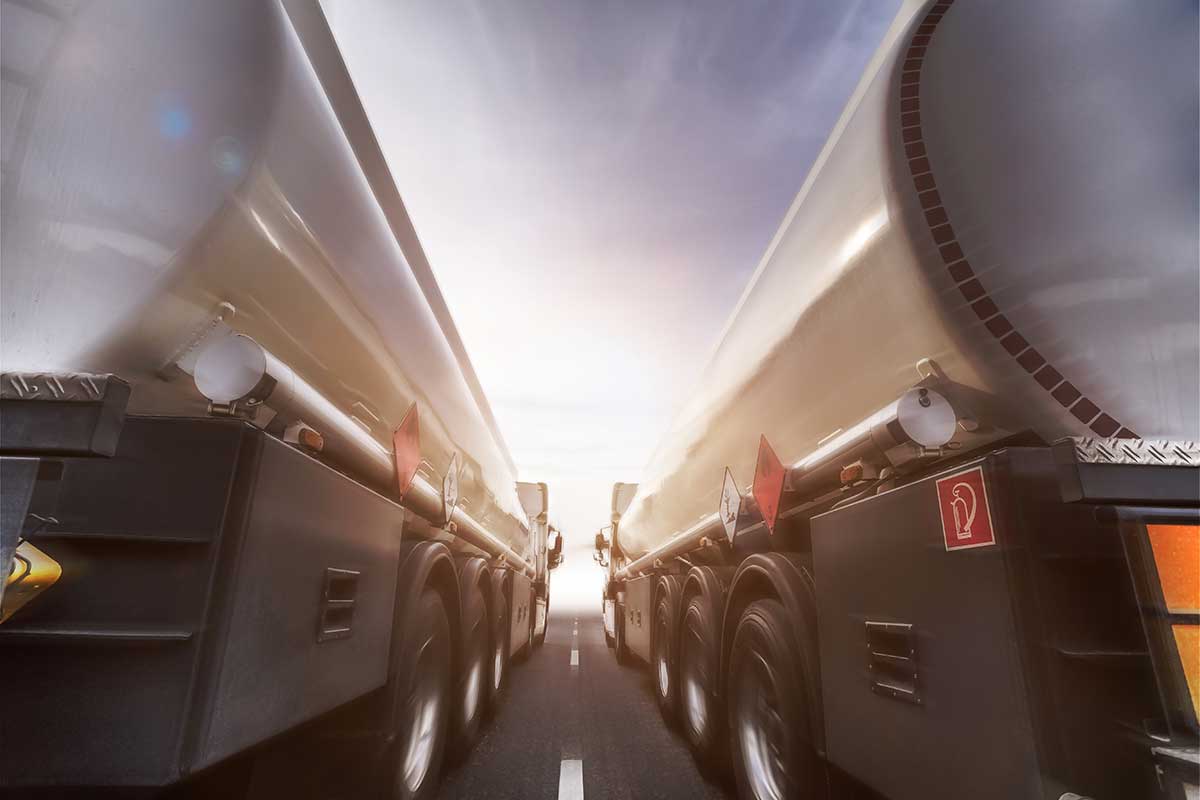
Dry bulk and liquid bulk transport both move product by the trailer load, but they run on different equipment, compliance rules and scheduling pressures, so a bulk transportation management system (TMS) needs to handle each one on its own terms.
Ask a grain hauler and a chemical tanker operator to describe a "normal day," and you'll get two completely different answers. Both move product in bulk. Both live and die by turnaround times, weight compliance, and equipment availability. But the physical realities of what's in the trailer - dry, free-flowing solids versus liquids under pressure or gravity - send the two operations down separate paths almost from the moment a load is booked.
That's the trap a lot of transportation management systems fall into: they're built around one of these playbooks and bent to fit the other. For a bulk carrier or broker running both streams - or evaluating a platform that needs to support growth into the other - that mismatch shows up fast, in workarounds, spreadsheets bolted onto the "real" system, and dispatchers who trust their own judgment over the software's.
What Is the Difference Between Dry Bulk and Liquid Bulk Transport?
Dry bulk is free-flowing solids like grain, fertilizer, stock feed and aggregate, typically hauled in pneumatic tankers, hopper trailers or tippers. Liquid bulk covers chemicals, by-product streams and food-grade liquids like juice, wine and oils, hauled in tankers. Both are planned around weight or volume rather than pallets or pieces, which is why weighbridges, payload limits and site access windows shape every load.
How Does Scheduling Differ for Dry Bulk and Liquid Bulk Carriers?
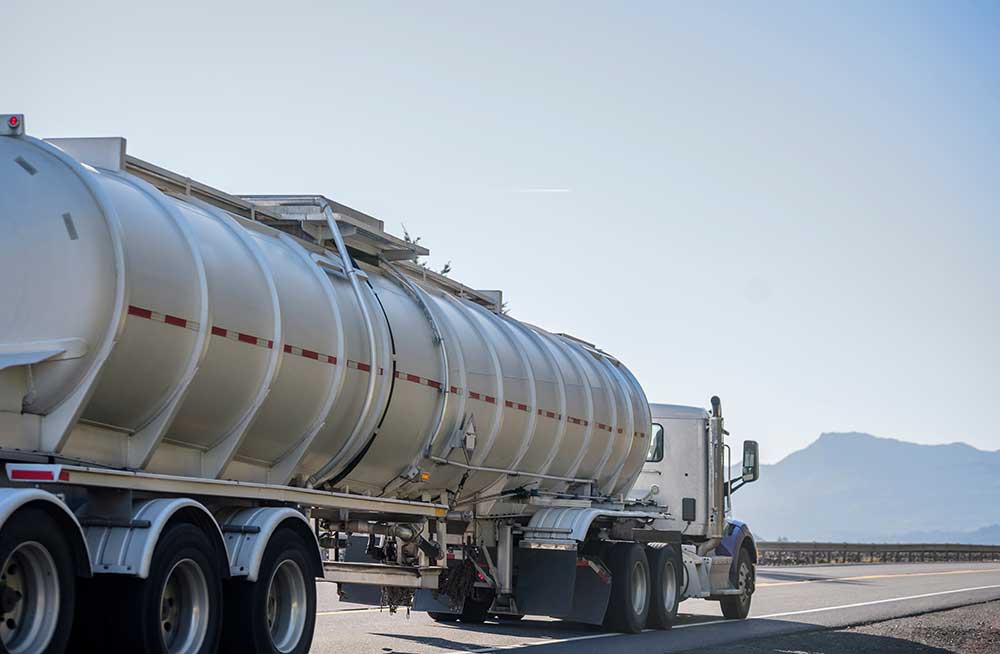
Every bulk carrier fights deadhead miles, but dry and liquid operations fight them for different reasons. Liquid bulk trailers generally need to be washed out between loads, especially when switching commodities or hauling food-grade or chemical products where cross-contamination is a real risk. Certified wash facilities aren't always close to the delivery point, and a driver can lose an hour or more just getting to one - time that has to be planned for, not discovered mid-route. Dry bulk avoids that mandatory washout cycle in most cases, but it has its own scheduling pressure point: site booking slots, weighbridge queues, and facility congestion at grain elevators, quarries, and feed mills that run on tight receiving windows.
A TMS that treats "schedule the next load" as a single generic function misses both of these. What liquid bulk needs is washout-aware routing that books the wash bay as part of the trip, not an afterthought. What dry bulk needs is tight weighbridge and site-slot integration that keeps trucks from stacking up at the gate. Bolting one onto the other rarely works cleanly.
How Do Compliance Requirements Differ for Dry and Liquid Bulk?
Liquid bulk, particularly anything hazardous, carries a heavier documentation load: placarding, hazmat certifications, driver training records, spill containment and leak-testing protocols, and DOT requirements that get stricter the more dangerous the commodity. Dry bulk carries its own compliance burden - food-grade sanitary transport rules, blower and pressure-system inspections, FMCSA and OSHA requirements around pressurized equipment - but the shape of it is different, and the paperwork that satisfies one set of auditors won't satisfy the other.
Layer heavy-vehicle route restrictions on top of that - weight limits, bridge restrictions, permit requirements that vary by state and by commodity - and it becomes clear why generic routing logic isn't enough. A platform built for bulk needs to know not just where a truck can legally drive, but what it's legally allowed to be carrying when it gets there and have the documentation trail to prove it.
How Does Load Planning Work Across Different Bulk Commodities?
Dry bulk commodities vary enormously in density - a trailer that's "full" by volume for stock feed might be dramatically under its legal weight limit for fertilizer or aggregate, or the reverse. Getting the payload math right, product by product, is a constant balancing act against axle weights and permit limits. Liquid bulk has its own version of the same problem, often compounded by multi-compartment trailers carrying more than one product at once, each with its own weight, temperature, and compatibility constraints.
This is where a lot of "one-size-fits-all" systems quietly fail carriers: they treat load planning as a single formula when it's really two different math problems wearing the same interface.
What Is a Bulk Transportation Management System?
A bulk transportation management system is software built around the specific needs of bulk transport: payload and density calculations, heavy vehicle permits and route restrictions, wash cycles, weighbridge data and site booking. A generic TMS is usually designed for palletized or containerized loads, where a load is a count of items. In bulk, a load is a weight or volume that has to match axle limits, trailer type and what the receiving site can accept, so the planning logic has to work differently.
What Should a Bulk Carrier Look for in a TMS?
None of this means dry bulk and liquid bulk operations need entirely separate systems. You might have drivers or tractors that bounce between products. The core coordination problems - carrier assignment, contract management, real-time visibility, backhaul matching to cut empty miles, weighbridge and site data flowing automatically into the load record - are shared infrastructure. What has to change underneath is the logic layer: routing that understands washout cycles for one commodity stream and site-slot congestion for another; compliance workflows that generate the right documentation for hazmat liquid loads and the right sanitary records for food-grade dry loads; equipment matching that actually knows the difference between a pneumatic hopper and a stainless tank.
How Does M2X Support Both Dry and Liquid Bulk Operations?
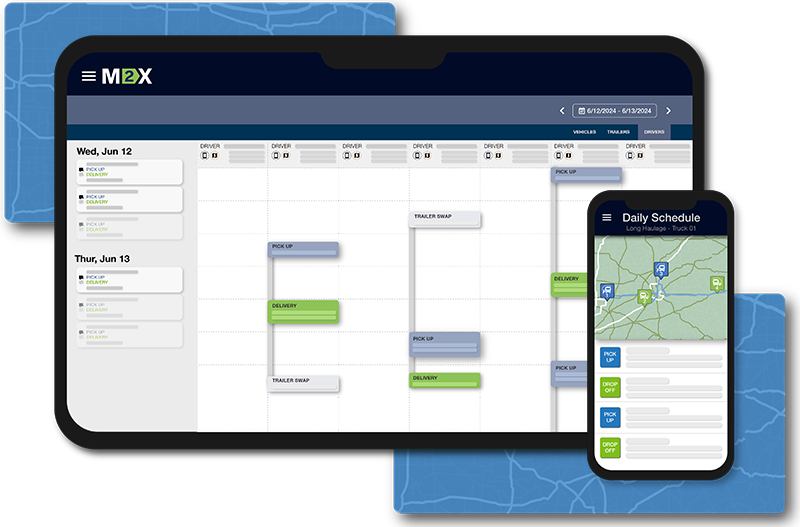
M2X is industry-specialized, cloud-native transportation management software built for the bulk industry. Rather than forcing one commodity type to bend around rules written for the other, the M2X platform runs dry and liquid bulk side by side, from fertilizer, grain and stock feed to chemicals, by-product streams and food-grade liquids like juice, wine and oils.
Whether you run your own fleet, work with contracted carriers or both, our transportation management software brings planning, dispatch and reconciliation into one place, streamlining the order-to-cash cycle. Built for the complexities of bulk transport, the M2X platform helps you:
- Plan compliantly with legal weight limits by automatically recommending the best routes for heavy and oversized vehicles, avoiding weight-restricted roads and bridges
- Reduce risk with automated scheduling alerts for industry regulations, including routing weight limits and hazardous materials
- Integrate with weighbridges to automatically capture weight data, update load quantities and pre-advise the weighbridge before truck arrival
- Reduce congestion at sites and stores with a vehicle booking slot tool that lets carriers self-manage around busy times
- Lay out the day's work in the most efficient way and match backhaul opportunities to reduce empty miles
- Manage large, long-term contracts with bulk suppliers or customers, building them into day-to-day scheduling and tracking progress over time
- Automatically assign carriers using a tiered approach and find network capacity when needed
- Work digitally with subcontractors across booking, execution and billing
You can learn more on our bulk transportation management page: https://www.m2xgroup.com/bulk-transportation-management
For a bulk operator considering a TMS, the right question isn't just "does it handle bulk?" It's "does it know the difference between the two kinds of bulk I actually run?" That distinction is usually where the real operational value - and the real cost savings - show up.