Supply chain and logistics operations don’t slow down - and neither do the challenges that come with them. Capacity can change overnight, demand can spike, costs fluctuate, and disruptions can occur.
In transport and logistics, teams must balance many areas at once, including:
- On-time collection and delivery
- Transport costs
- Driver and vehicle constraints and availability
- Warehouse capacity
- Route feasibility and efficiency
- Customer expectations
When businesses rely on spreadsheets, manual schedules, or outdated technology, the job gets harder. While this approach may have worked in the past, it struggles to keep up with today's supply chain complexities.
That’s why AI-driven optimization software becomes essential - it can solve hard problems, balance multiple constraints and inputs, and use data to inform efficient decisions. AI-driven optimization software unlocks measurable efficiency improvements across transport and logistics operations.
What is AI-Driven Optimization Software
AI-driven optimization software uses advanced algorithms and other sophisticated tools to analyze data, automate processes, identify patterns, and recommend actions to automate planning and support better decisions. This helps logistics, supply chains, and transport teams improve performance in multiple areas, including reducing late collections and deliveries, empty miles and cost per delivery, whilst increasing fleet utilization.
In contrast to basic automation tools, AI-driven optimization software improves the quality of decisions. It supports business planning, scheduling, and resource allocation in ways that produce measurable outcomes and improve operational consistency and performance.
Benefits of AI-Driven Optimization Software
Using spreadsheets or outdated systems to manage your transport can result in delays, inefficiencies, errors, and added costs. Without AI-driven optimization software, businesses can struggle with today's need for speed, accuracy, and visibility across complex operations. As a result, AI-driven optimization software creates a clear advantage - improved planning efficiency, customer service and performance.
Here are 5 benefits of using AI-driven optimization software to manage your transport.
1. Faster, More Confident, Data-driven Decisions
AI-driven software helps businesses make smarter, more confident decisions at high speed. Analyzing operational data and automatically updating plans as conditions change can result in more proactive optimization outcomes. AI-driven optimisation supports dispatchers and schedulers by automating complex planning decisions, reducing manual workload and significantly improving scheduling efficiency.
2. Cut Transport Costs with AI-Driven Software
AI-driven optimization lowers costs by improving how routes, loads, and schedules are planned - reducing unnecessary miles, fuel use, and driver time.
3. Improved Efficiency and Productivity
AI-driven optimization increases efficiency and business performance by speeding up planning and dispatch, reducing downtime, and keeping vehicles and drivers productive. Better schedules and fewer disruptions mean businesses can complete their jobs on time more consistently and scale output without expanding their team, improving overall profitability.
4. Reduced Complexity Through Automated Planning
Sophisticated AI-driven algorithms evaluate millions of potential solutions, considering multiple constraints such as time windows, vehicle capacities, and regulatory restrictions to find the most efficient way to schedule each transport movement. This reduces manual workload, lowers key person risk, and improves the efficiency of operations.
5. Reduced Waste and Improved Sustainability
An AI-driven TMS supports sustainability by reducing unnecessary miles, improving load efficiency, and ensuring on-time deliveries through AI-driven route and load optimization. Smarter routes and schedules mean lower fuel consumption, better utilization, and reduced emissions. This improves overall cost efficiency.

The Future of Optimization: Why Your Business Needs to Keep Up!
1. Moving Beyond Traditional Technology
AI-driven optimization is shifting beyond traditional technology and towards systems that adjust schedules as conditions change. AI-driven optimization does this by;
- Learning from past operations, so future adjustments to schedules get smarter, not just faster
- Recommending the most efficient and profitable plan - optimizing routes, loads, and schedules while factoring in key business priorities, like fuel cost, delivery windows, and customer expectations
2. Continuous Optimization for Dynamic Supply Chains
AI-driven software can support businesses by automatically optimizing operations as disruptions occur, enabling faster responses, more accurate forecasting, and stronger day-to-day execution across transport and logistics.
- Keeping operations efficient no matter the changes, e.g. new orders, changes in delivery time windows, and changes in driver availability
- Real-time continuous visibility across your whole supply chain, so everyone is on the same page
3. Improved Sustainability
AI-driven software helps companies reduce their environmental impact through efficient fleet and route planning, load consolidation, increased capacity utilization, minimizing empty running and reducing unnecessary transport movements.
- Track and achieve your sustainability goals - across financial, social and environmental aspects
- Reduce your carbon footprint with real-time carbon emissions tracking
- Comprehensive emissions reporting to share with stakeholders and customers
4. Future-proof Your Operations
A TMS with AI-driven optimization adapts continuously, helping you stay ahead of competitors, build a sustainable supply chain for the future, and improve overall operational efficiency.
- Unlock scalable growth to stay ahead of the curve
- Provide better commitments to customers and partners when conditions change
- Prepare for future growth with leading-edge technology
How Does M2X Use AI-driven Optimization?
AI is at the core of M2X’s software, using advanced algorithms to create highly sustainable and efficient supply chains and transport movements.
M2X’s AI-driven transport optimization software is designed for the realities of modern supply chains and built to improve operational decision-making. M2X transforms complex planning and dispatch challenges into automated, clear, actionable, data-driven processes without the burden of manual updates. Our AI-driven software delivers better outcomes across supply chain and transport operations.
1. Inventory Forecasting & Transport Planning
The M2X platform uses AI and machine learning to anticipate supply and demand fluctuations, optimize stock levels, and prevent costly shortages or overstocks. AI-driven software integrates forecasting and allocation to improve scheduling across the supply chain, increasing overall efficiency.
M2X has created AI-driven tools to turn complex planning challenges into optimized recommendations, balancing constraints, reducing waste, and improving performance at a fast pace.
2. Optimized Asset Allocation
M2X’s AI-driven tools optimize asset allocation across work and fleets. As a result, businesses can reduce transport costs, improve on-time delivery performance, and minimize unnecessary emissions.
3. Advanced Optimization Capabilities
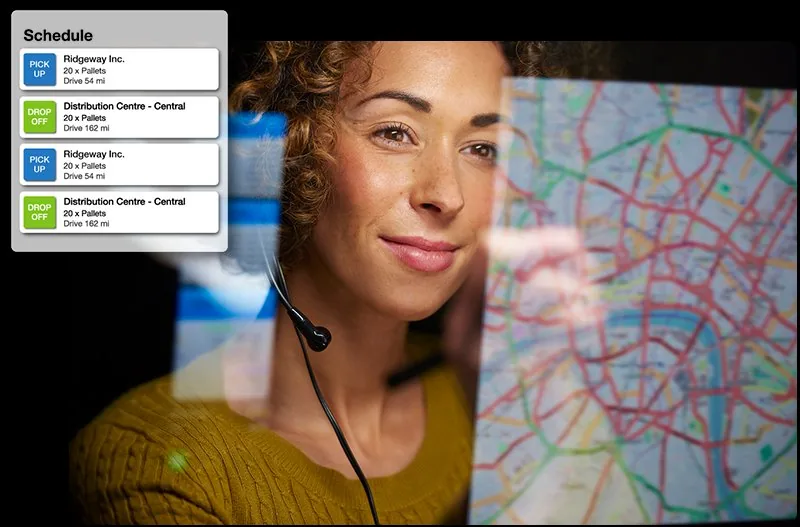
M2X uses sophisticated AI-driven algorithms to evaluate millions of potential solutions, considering multiple constraints such as time windows, vehicle capacities, and regulatory restrictions to find the most efficient way to schedule each transport movement. As a result, schedulers can ensure the most efficient scheduling and dispatch, so each transport movement is handled smarter and faster.
Conclusion
AI-driven optimization software for transport and supply chain operations is essential for organizations that want to stay ahead of the curve and future-proof their business. This specialized software improves performance across operations - from cost reduction and improved sustainability to more efficient operations. The benefits are clear and measurable.
As operational challenges grow and customer expectations rise, businesses that invest in AI-driven optimization software will be better positioned to make smarter decisions and stay ahead of their competitors. For organizations looking to move from reactive planning to proactive decision-making, AI-driven optimization is no longer a future concept - it is a practical tool delivering value today.